
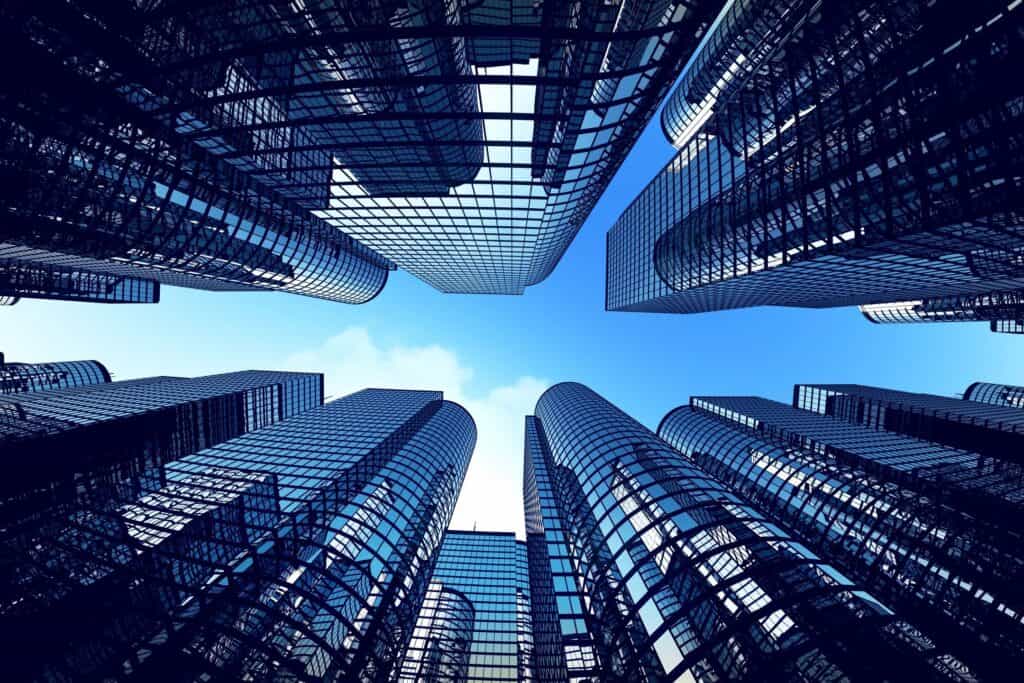
Commercial Construction refer to constructing buildings in which people engage in various business activities, including retail stores, shopping malls, markets, financial stock exchanges, business office buildings, hotels, restaurants, and entertainment facilities. The difference in understanding of business activities will inevitably lead to differences in understanding of commercial buildings. In a narrow sense, commercial buildings refer to buildings for the exchange of goods and the circulation of goods.
The concept of architecture also has a broad interpretation, that is, all buildings that are engaged in business activities are commercial buildings. Of course, from a commercial perspective, both narrow and broad interpretations can be made, but from an architectural perspective, commercial buildings are public space environments that people use to conduct business. It can be a building unit or it can be made up of several
The building complex and its external space constitute.
To truly understand the connotation of commercial buildings and commercial construction, it is necessary to further understand the formation and evolution of commercial activities. Human activities in business can be traced back to the ancient primitive production period. Initially, it was carried out in the form of a private transaction in which goods were exchanged, snapped, exchanged, and semi-hidden, and later developed into a regular market transaction. The formation of the market is closely related to folk festivals, auspicious days, farming and farming, and so on.
The market is gradually fixed in the form of “going to market” and “temple meeting”, and it is concentrated in the intersections of the ferry, the station, the night, and other traffic routes. Fixed goods vendors and inns that provide accommodation for customers are the basic prototypes of fixed shops. With the development of agricultural farming techniques and the large increase in agricultural and sideline products, seasonal agricultural trade, livestock trading and handicraft transactions have also formed a professional trading venue. From non-scheduled to regular, commercial activities develop from fixed to fixed, from decentralized to concentrated.
Commercial trading venues have gradually evolved into specific commercial building spaces, and shops have fixed a variety of commodity industries, and towns or commercial districts have developed. The fixed commercial space must be equipped with certain commercial facilities to facilitate access to the guests. In order to cope with commodity trading, the corresponding vehicles, transportation, hotels, other leisure facilities and service industries such as freight, exchange, and communication also arise with the demand for commercial activities.
Based on the formation and exclusive use of commercial buildings, commercial buildings have both the general attributes of the building and the commercial proprietary attributes. They are specially designed and constructed for commercial use. They are an organic combination of business and architecture. When the society develops to a specific stage, the commercial uses the building carrier to realize the new architectural form of the industry development. It is based on general architecture and is different from ordinary buildings. It is sturdy, beautiful, special, expandable and transformable. It reflects the flexibility of architectural design, the diversity of architectural forms, the composite of architectural functions, the durability of buildings and The resulting commercial building is scalable, transformable, inherited, and transferable.
These attributes of commercial buildings determine commercial buildings as a kind of building, and have economic value and value-added potential that other buildings do not have. In addition, commercial buildings generally have a good geographical position. Therefore, commercial buildings have been the type of infrastructural with the highest frequency of transfer, the largest appreciation, and the strongest building capacity.


